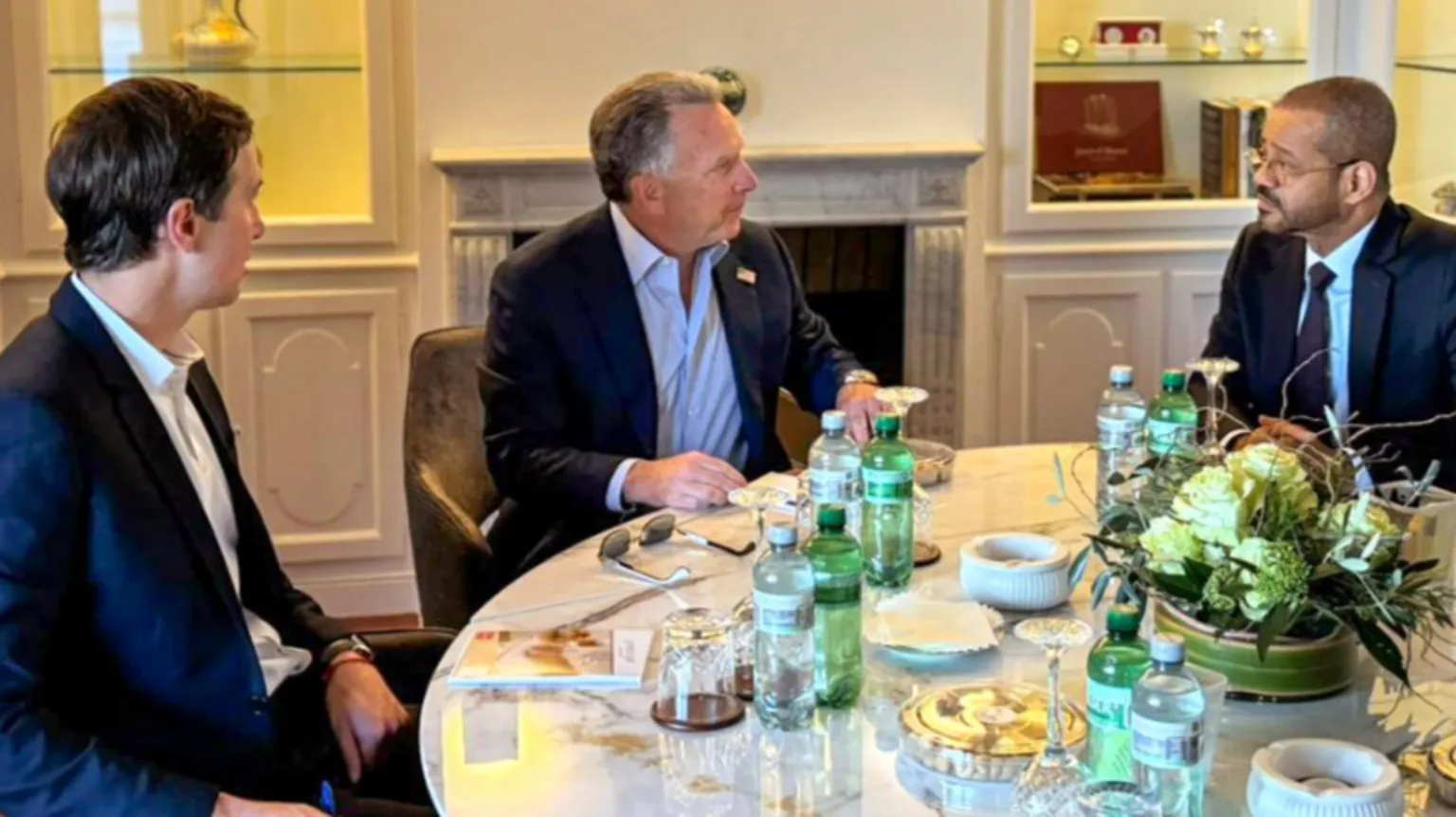
Tensions between the US and Iran showed a cautious easing after high-level nuclear talks in Geneva, where officials from both countries reported progress but acknowledged major disagreements remain.
The discussions, brokered by Oman, have not produced a final deal, yet both sides agreed to continue talks in their capitals before technical meetings resume next week in Vienna.
Omani Foreign Minister Badr Albusaidi, who mediated the talks, said the two delegations had made "significant progress," signaling that dialogue remains possible despite the rising threat of conflict.
Iran’s Foreign Minister Abbas Araghchi, leading Tehran’s team, described the outcome as "good progress," noting that while some points were agreed, other issues still need resolution. He added that the next round of negotiations will take place in less than a week.
The ongoing discussions could lower the likelihood of the US carrying out military strikes, which President Donald Trump has repeatedly threatened. Over recent months, Trump has ordered the largest American military deployment to the Middle East since 2003, while Iran has vowed to respond forcefully to any attack.
For years, Washington and its allies, particularly Israel, have accused Iran of secretly pursuing nuclear weapons. Tehran denies these claims, insisting its nuclear programme is only for civilian energy purposes, though it remains the only non-nuclear-armed nation enriching uranium near weapons-grade levels.
Iranian media reported that negotiators emphasized the country’s right to peaceful nuclear energy and rejected US demands to halt enrichment entirely or ship its stockpile of 400kg of enriched uranium abroad.
At the same time, Iran is believed to have explored compromises, such as suspending enrichment for three to five years with international monitoring before gradually resuming minimal activity.
In return, Tehran seeks the lifting of sanctions that have heavily damaged its economy. Critics warn that easing restrictions could strengthen Iran’s clerical leadership and prolong its influence in regional conflicts.
The indirect talks were conducted in two sessions at the Omani ambassador’s residence in Geneva, a longer meeting in the morning followed by a shorter evening session. No immediate response was issued from the US regarding the progress made.
The American delegation included Special Envoy Steve Witkoff and Jared Kushner, President Trump’s son-in-law. Rafael Grossi, head of the International Atomic Energy Agency (IAEA), also participated, highlighting the international stakes involved.
Despite the reported progress, uncertainty remains over what terms Trump would accept in a deal. The president has yet to explain why military action might be necessary now, eight months after the US bombed Iranian nuclear sites alongside Israel.
Iran has already ruled out negotiations on curbing its ballistic missile programme or ending support for regional allies such as Hamas, Hezbollah, militias in Iraq, and the Houthis in Yemen.
The US has sent thousands of troops, fighter jets, and two aircraft carriers to the region, part of what Trump has described as an "armada." The USS Gerald R Ford, the world’s largest aircraft carrier, recently left Crete for deployment in the Middle East.
Trump initially threatened strikes last month in response to Iran’s suppression of protests, which led to significant casualties. His focus has since shifted back to Iran’s nuclear programme, a long-standing point of international dispute.
During his State of the Union address, Trump referenced the threat from Iran but offered few specifics on military plans. He claimed the country is developing missiles that could soon reach the US and accused it of attempting to restart a nuclear weapons programme, arguing the US cannot allow the "world's number one sponsor of terror... to have a nuclear weapon."
Hours before the address, Araghchi reaffirmed on social media that Iran would "under no circumstances ever develop a nuclear weapon."
In June last year, the US struck three Iranian nuclear facilities alongside Israel. Iran says enrichment stopped after these attacks, though it has denied IAEA inspectors access to the damaged sites.
Reports in US media, citing anonymous officials, suggest Trump might order initial strikes on Revolutionary Guards or nuclear sites if talks fail. Some reports indicate a broader campaign against Supreme Leader Ayatollah Ali Khamenei could be considered.
US military advisers warned that attacking Iran could risk a prolonged conflict, but Trump insists Gen Dan Caine believes any confrontation would be "easily won." Iran has vowed retaliation against US military assets in the Middle East and Israel, heightening fears of a wider regional war.
Regional allies have cautioned that air strikes alone are insufficient to remove Iran’s leadership, while Israeli Prime Minister Benjamin Netanyahu has demanded any deal address Iran’s missile programme and regional proxies. Analysts suggest Netanyahu may be advocating for actions aimed at destabilizing the Iranian regime.
The US maintains the second-largest nuclear arsenal globally, while Israel is widely believed to have nuclear weapons, though it neither confirms nor denies their existence.































Comments
Sign in with Google to comment, reply, and like comments.
Continue with Google